The exilic writing of the Old Testament is some of the most powerfully applicable Old Testament Scripture to the modern reader. I am excited to arrive at them in our journey through the story of the Bible this year.


The exilic writing of the Old Testament is some of the most powerfully applicable Old Testament Scripture to the modern reader. I am excited to arrive at them in our journey through the story of the Bible this year.


The Babylonian exile is one of the most complicated narrative backdrops in the Old Testament, spanning many prophetic and historical books in Scripture. Understanding the scope of the exile and the return will inform our reading of dozens of Old Testament books, and help us gain a better understanding of the story of God’s people through history.
(Preaching on the exile to Babylon. This sermon was preached at the Dewey Church of Christ on July 20, 2025.)
Lamentations might be the hardest book to read in the Bible; not because it’s obscure or overly intellectual, or because it is simply a compilation of census data, but because it’s extremely heavy and emotional. Why was it written, and why is still just as valuable for modern readers?
(Preaching through the prophets. This sermon was preached at the Dewey Church of Christ on July 20, 2025.)
This was by far one of the most difficult charts/timelines to put together in our journey through the Bible this year. The Babylonian exile and eventual return serves as the backdrop for many Old Testament books. I hope this can give you a clearer overall picture of this momentous period of Biblical history.

Jeremiah is a hard book for modern readers to understand (like many of the Israelite prophetic books). What are some of the factors that contribute to this difficulty, and how can modern readers understand the book in its own context while also making application for ourselves?
(Preaching through the prophets of Israel. This sermon was preached at the Dewey Church of Christ on July 13, 2025.)
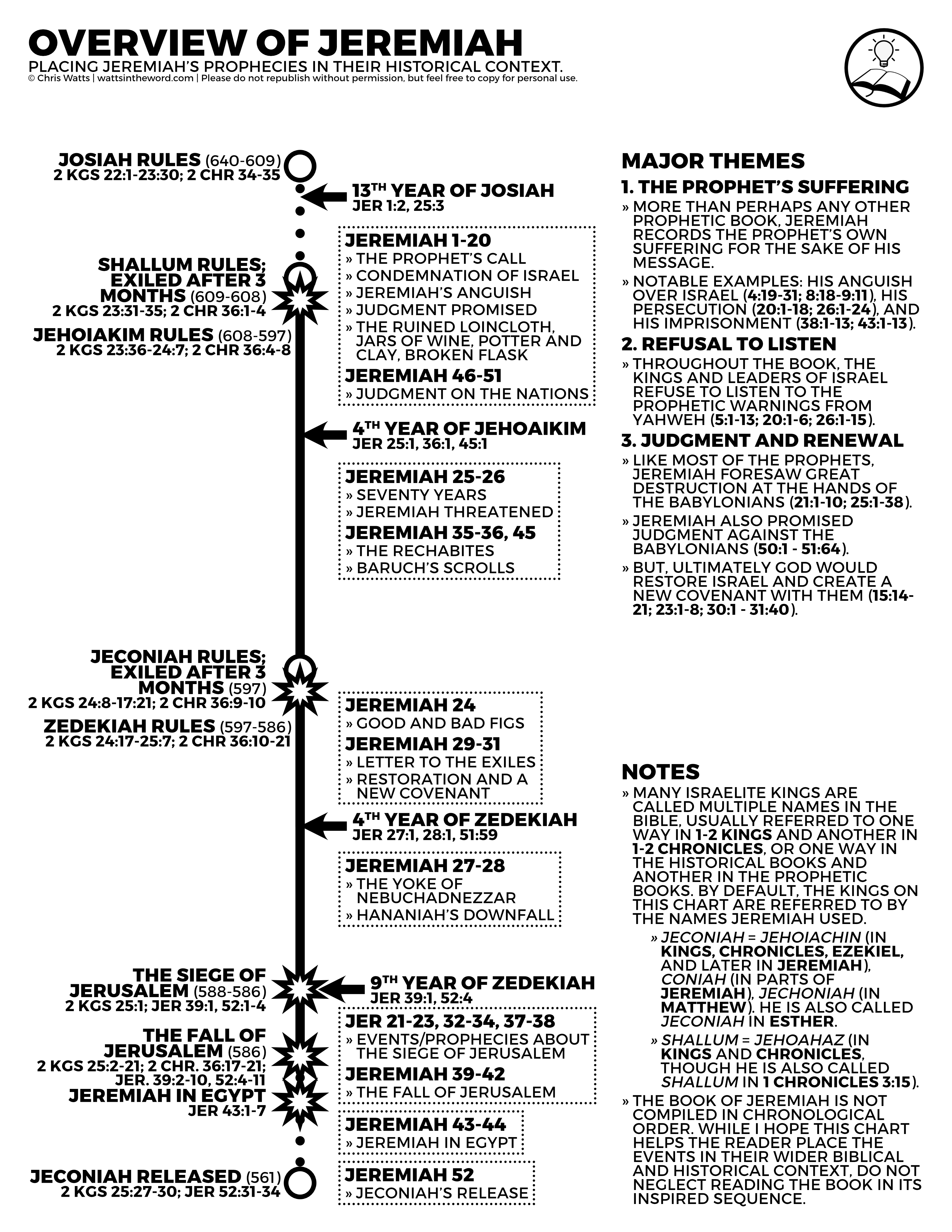
The book of Jeremiah is not arranged chronologically, so in our reading through the Bible our text for this week comes a little out of historical order. Jeremiah 29 is addressed to people living in exile after Babylon had come against Israel and carried many of them away. What did Jeremiah have to say to these exiles, and how does their situation mirror our own?
(Preaching through the prophets of Israel. This sermon was preached at the Dewey Church of Christ on July 13, 2025.)
Jeremiah is one of the most challenging books to understand, both in the theme and content of his message, as well as the structure and chronology of the writing and the prophet’s own life. I hope this chart will help give you a broader perspective on the prophet’s work.

Most of the prophetic books of Israel simply record the oracles of the prophets, without revealing much about the prophets themselves. However, the books of Jeremiah and Isaiah begin with the call of the prophet and God’s intent for their ministries. What can we learn from the call of these two men, their responses, and their work?
(Preaching through the prophets of Israel. This sermon was preached at the Dewey Church of Christ on July 6, 2025.)
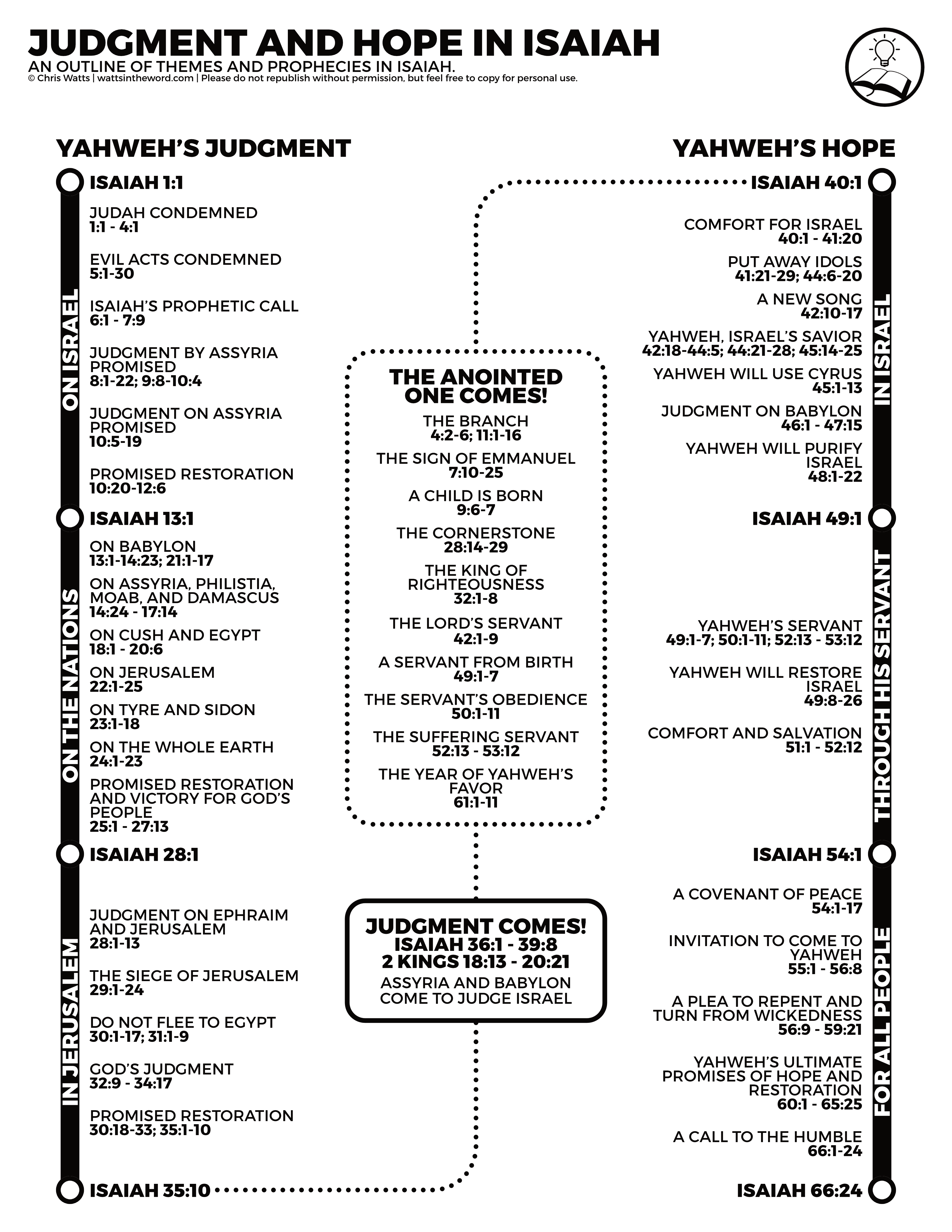
Where the first half of Isaiah is mostly judgment punctuated by promises of restoration, the second half is primarily hopeful promises with occasional reminders of judgment. What kind of hope does Isaiah offer to Israel, and how does he expect the hope to be accomplished for God’s people?
(Preaching through the prophets. This sermon was preached at the Dewey Church of Christ on June 29, 2025.)
The first half of Isaiah primarily consists of God’s judgment on Israel and the nations. Why did Isaiah prophesy so much judgment, and how might we be in danger of the same denunciations today?
(Preaching through the prophets. This sermon was preached at the Dewey Church of Christ on June 22, 2025.)