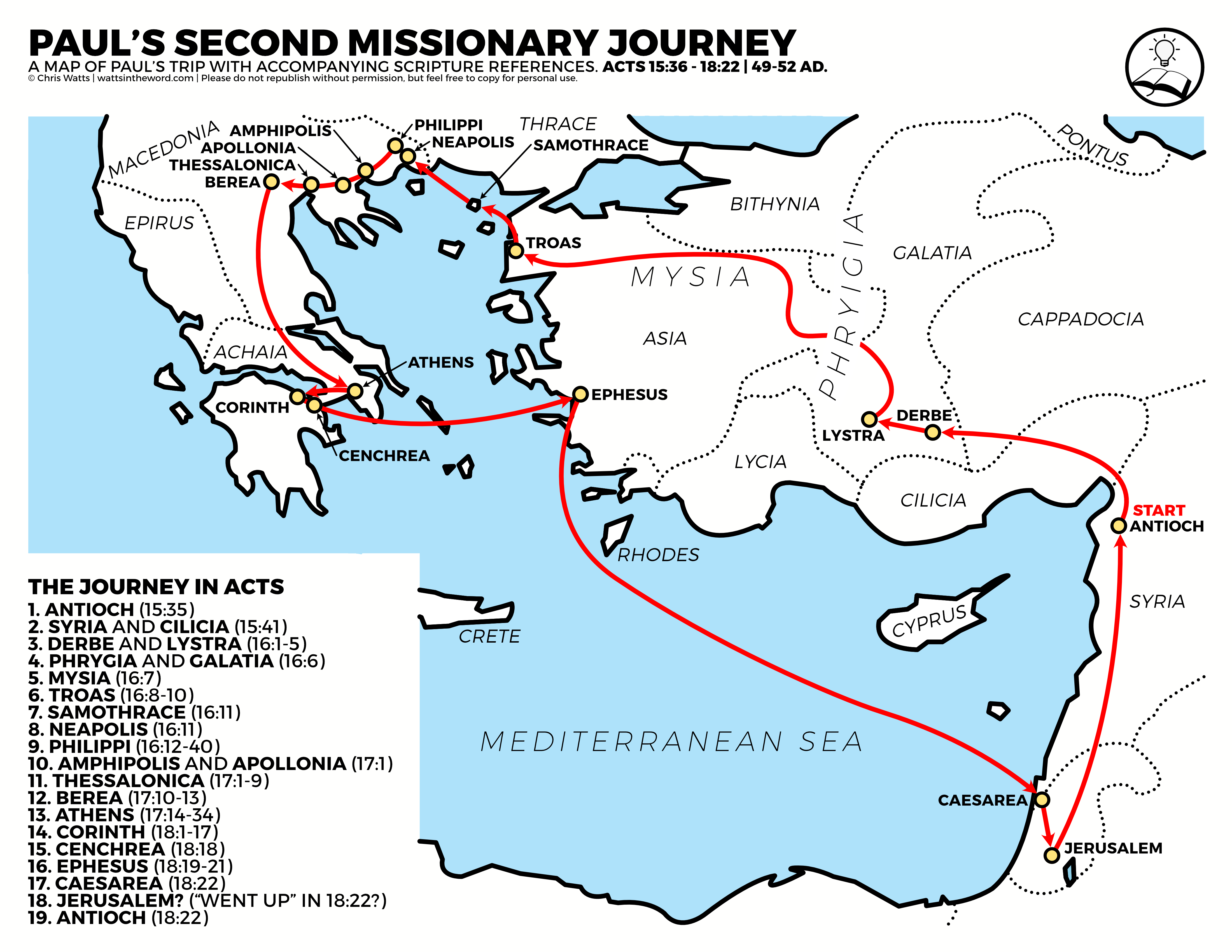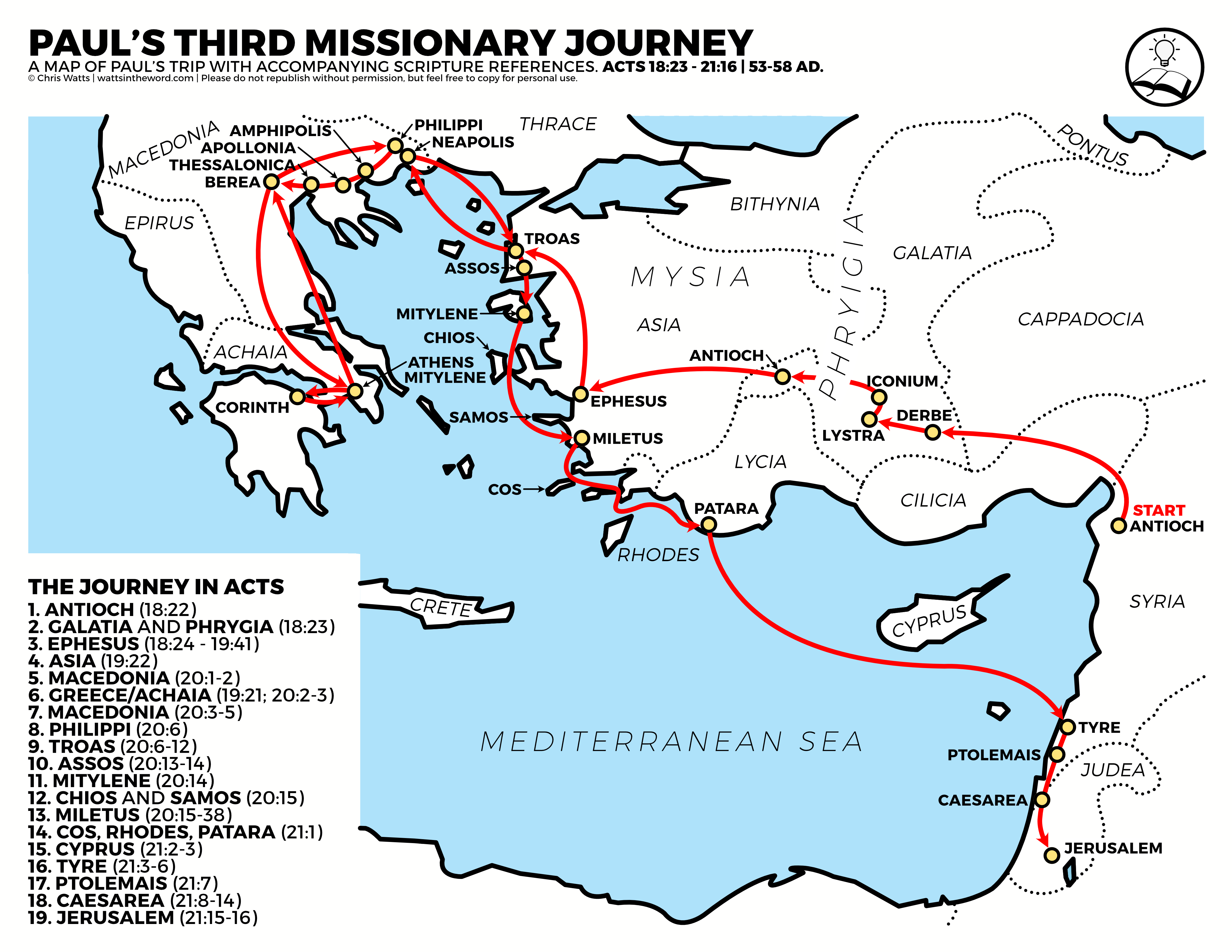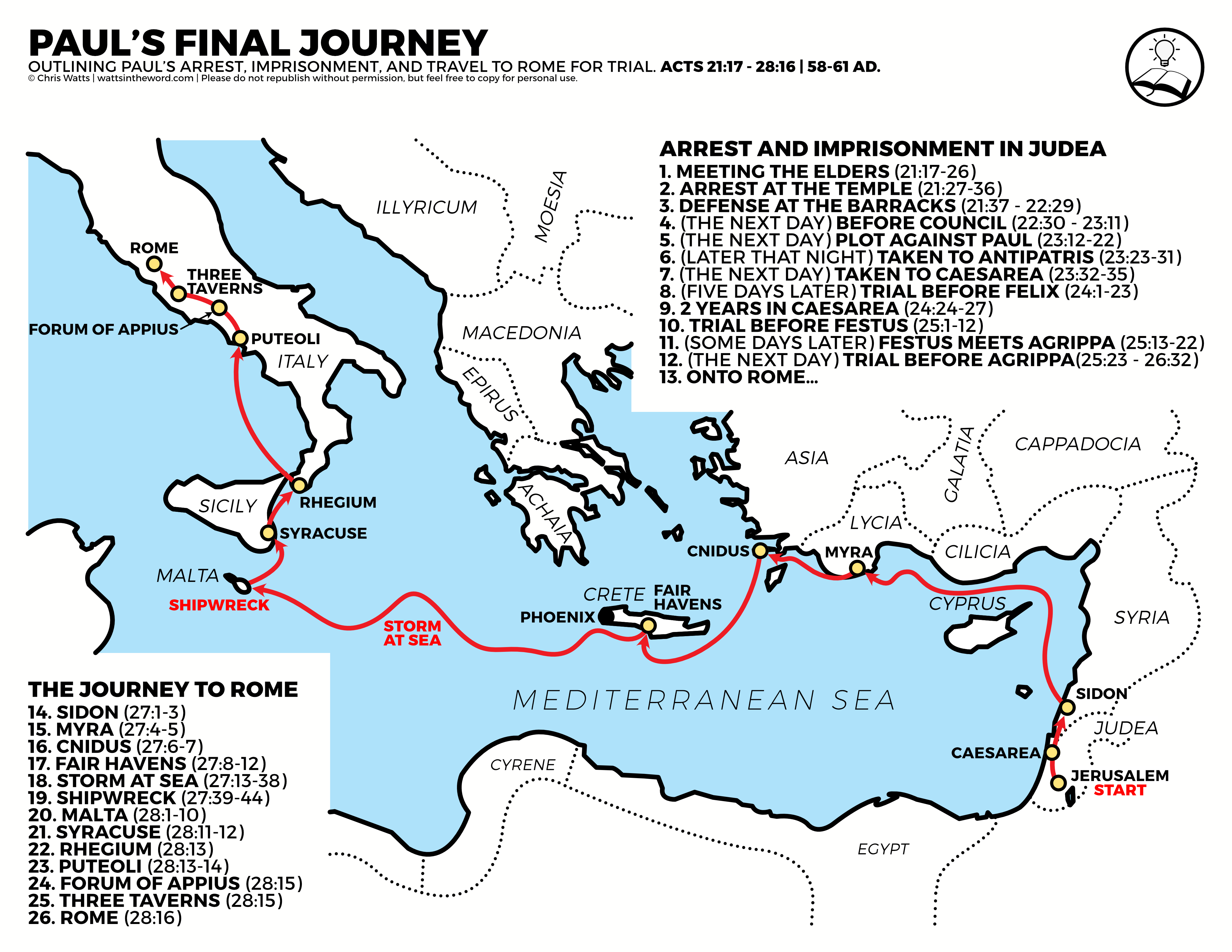
The latter half of Acts centers on Paul’s mission work and eventual arrest and journey to Rome. I hope these maps will help you keep the flow of the story in your mind as you read.


The latter half of Acts centers on Paul’s mission work and eventual arrest and journey to Rome. I hope these maps will help you keep the flow of the story in your mind as you read.


How we think about the form, structure, and purpose of the New Testament will inevitably affect the way we approach, read, and interpret it. What did Jesus have to say about it, and what did its writers say about why and how it was written?
(Preaching on the new covenant of Christ. This sermon was preached at the Dewey Church of Christ on November 2, 2025.)
One of the main points of conflict in the early Church was the question of how to handle or relate to the Law of Moses. This is still a question many people wonder about today. How did Jesus and his apostles intend for Christians to think about the Law of Moses?
(Preaching on the transition to the Covenant of Christ. This sermon was preached at the Dewey Church of Christ on November 2, 2025.)
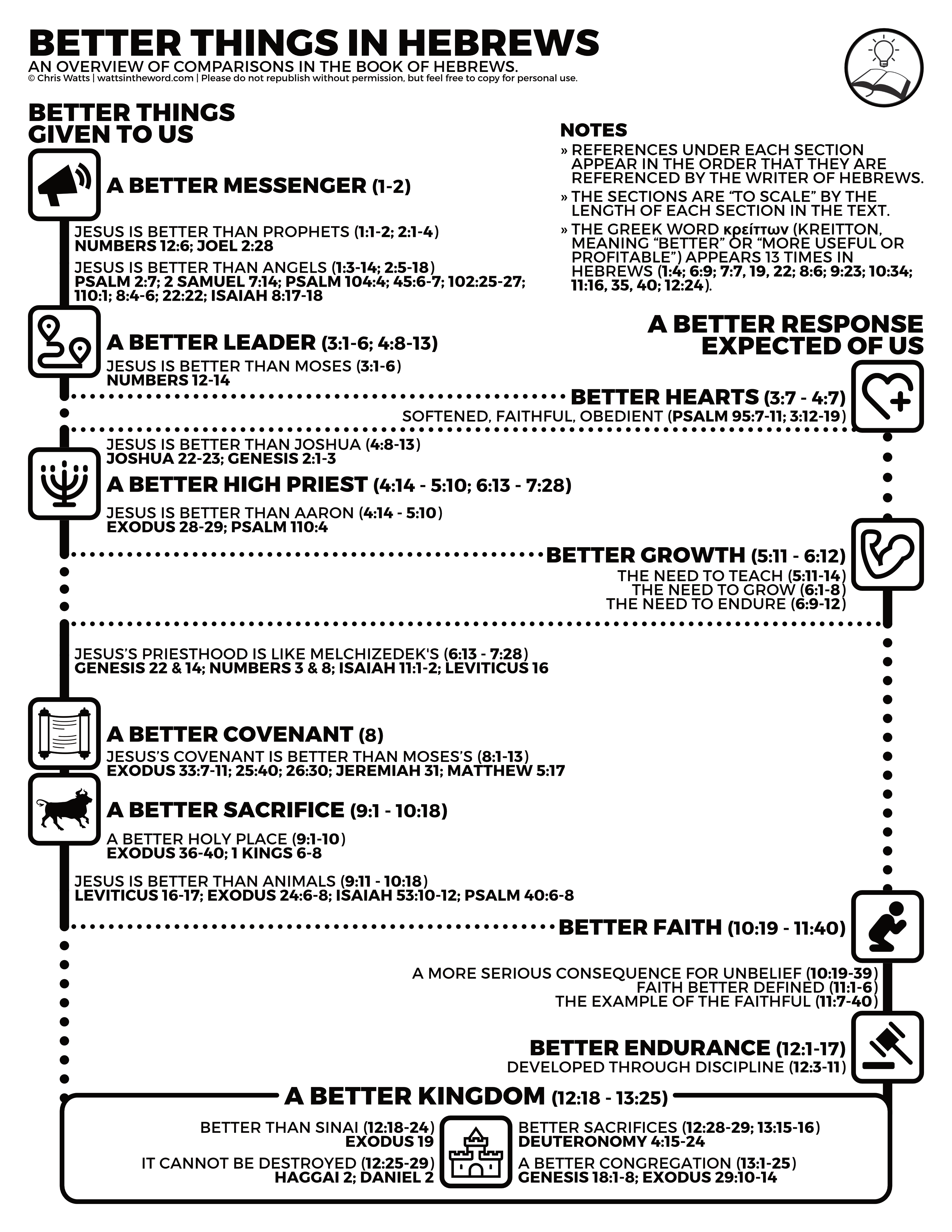
One of the ways to think about the book of Hebrews is an exchange of better things between us and God. He gives us many better things through Christ, and he in turn deserves a better response from us than he received in the Old Testament.

The first part of Acts is the first stage in the growth and the expansion of Jesus’s church, first in Jerusalem but then to the surrounding regions of Judea and Samaria. What kinds of struggles did the early church face, how did they overcome, and which of their attitudes and characteristics should we be emulating?
(Preaching on the early church. This sermon was preached at the Dewey Church of Christ on October 26, 2025.)
As we transition out of the Gospels in our reading into the story of the early church in Acts, it can be helpful to be able to visualize what you are reading. Of course, you can find many versions of these kinds of maps online, but I hope these can be helpful to you.


I found a version of this chart in Stan’s evangelism files. I have no idea where he found it, and I couldn’t find the original online. I remade it in my own style for a class on evangelism at church, and thought it might be helpful for people thinking about how to talk to others about Christianity.

A basic apologetic consideration of the historical reliability of the Gospels (and indeed the broader New Testament) breaks down into two main lines of reasoning: arguments based on history and how we know things, and arguments based on psychology and human nature. This is a very brief overview of a defense of the Gospel accounts, and if you want to know more please let me know!
(NOTE: Similar to Sunday morning, the audio cuts in and out a bit at the beginning. One of our microphones is apparently dying. Preaching on the the Gospels. This sermon was preached at the Dewey Church of Christ on October 12, 2025.)
Mark’s Gospel is a good one to use as a base for digging down to the core Gospel story; the part of the good news of Jesus’s life that all four Gospel writers included in their accounts. The list is surprisingly short, and while everything each writer wrote is essential for all Christians, considering the story in its most basic form powerfully confirms the simplicity and communicability of the Gospel story.
(NOTE: The audio cuts in and out a bit at the beginning. Sorry. Preaching on the Gospels. This sermon was preached at the Dewey Church of Christ on October 12, 2025.)
The “kingdom” is an especially important theme in Matthew’s version of the Gospel story. Jesus’s work was not disconnected from the story of Israel in the Old Testament; it was a fulfillment and continuation of God’s plan to establish his eternal kingdom, promised to David and Daniel. How does Matthew explore the importance of the “kingdom of heaven” in the life and teaching of Jesus?
(Preaching through the Gospels. This sermon was preached at the Dewey Church of Christ on October 5, 2025.)