The Culmination of Prophecy

Matthew’s gospel is the most closely connected to the Israelite story in the Old Testament. He connects these stories in two main ways: the fulfillment of prophecy, and the continuation of the kingdom. First, we will consider how Matthew addresses prophecy in the life of Jesus. How does Jesus fulfill all the promises of God in the Old Testament, and what does it mean for the modern reader?

Click Here to Listen.

(Preaching on the gospels. This sermon was preached at the Dewey Church of Christ on October 5, 2025.)

The Kingdom Promises

In addition to a heavy emphasis on Old Testament prophecy, Matthew also keys in on the idea of the “Kingdom.” This is an extension of two foundational Old Testament promises, one to Abraham and one to David. While Matthew really highlights Jesus’s teaching about what his new kingdom will be like, the New Testament writers as a whole connect Jesus to these ancient promises and emphasize that the kingdom of Jesus is the culmination of God’s redemptive work.

Prophecy in Matthew

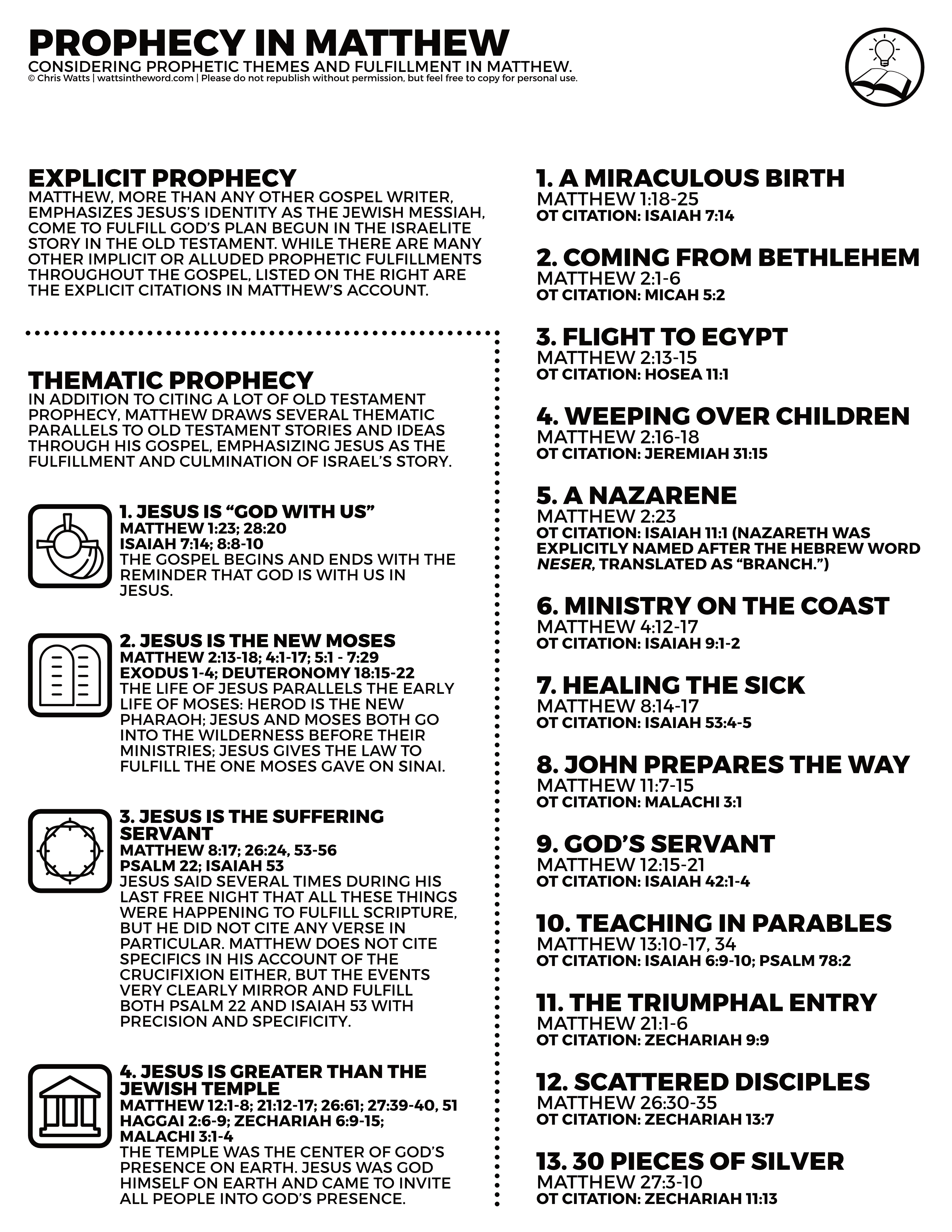
Matthew focuses on the Jesus the Jew more than the other gospel writers, especially in the way that Jesus is the culmination of so much Old Testament Hebrew prophecy. While Jesus fulfills more prophecy than just the ones listed on this chart, these are some of the most explicit references in Matthew, along with some overarching prophetic themes.

The Coming Messiah

For a word that carries such importance in modern Christianity, the word “Messiah” appears astonishingly little in the Bible. Why is that? Aside from the quirks of translations and transliterations, why is this such an important prophetic title, and how did the intertestamental Israelites begin to think about it, leading to the arrival of Jesus?

Click Here to Listen.

(Preaching on the intertestamental period. This sermon was preached at the Dewey Church of Christ on September 21, 2025.)

Intertestamental Prophecy

While there are no narrative parts of the Bible that describe the 400 years between Nehemiah and Jesus, the Bible is not silent about that era of history; Daniel had a string of visions describing that time. How do Daniel’s visions guide us through this era and bring us to the arrival of the “Son of Man”?

Click Here to Listen.

(Preaching on the intertestamental period. This sermon was preached at the Dewey Church of Christ on September 14, 2025.)

Hope in Isaiah

Where the first half of Isaiah is mostly judgment punctuated by promises of restoration, the second half is primarily hopeful promises with occasional reminders of judgment. What kind of hope does Isaiah offer to Israel, and how does he expect the hope to be accomplished for God’s people?

Click Here to Listen.

(Preaching through the prophets. This sermon was preached at the Dewey Church of Christ on June 29, 2025.)

Judgment and Hope in Isaiah

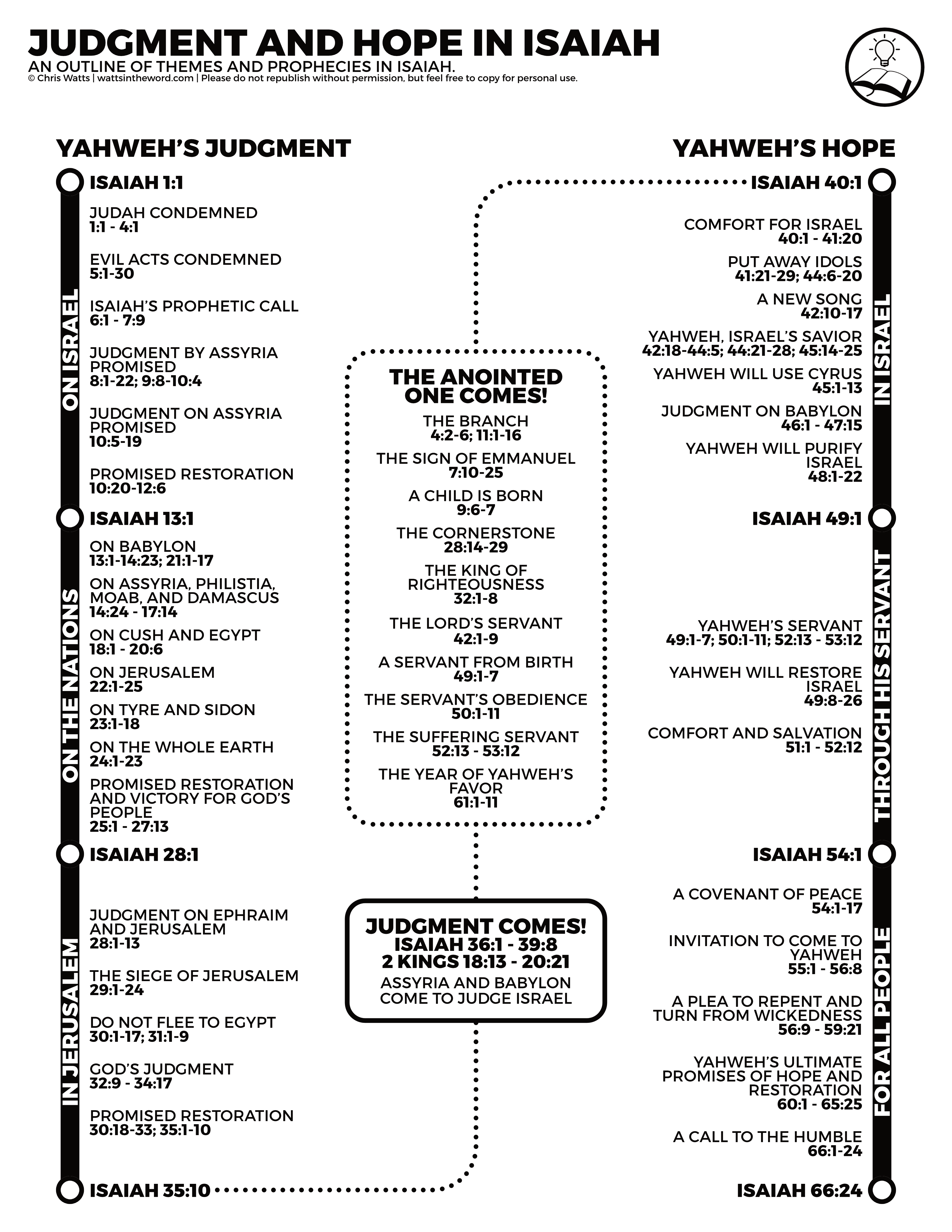
In our journey through the Bible this year, we have come to Isaiah, one of the longest and most-referenced books of the Old Testament. Here is a general outline and overview of Isaiah’s prophecies. There are many ways you could categorize and organize his visions, but I think the judgment-hope axis is particularly enlightening. I hope this helps your study of Isaiah!

Overview of the Prophets

The “Prophets” is the largest section of the English Old Testament, and there are a lot of prophets whose work is primarily found in the narrative sections of the Bible. The prophets clearly played a vital role in God’s connection with Israel. What was their job, how should we think about them, and how does their work compare to the mission of Christians today?

Click Here to Listen.

(Preaching on the prophets. This sermon was preached at the Dewey Church of Christ on June 15, 2025.)

Reading the Psalms Prophetically

The book of Psalms has a complicated relationship with foretelling. Some parts of it clearly tell the future in the vein of one of the prophets like Isaiah or Jeremiah, but a lot of the prophecy in the book is more subtle. The Psalms are full of “dual prophetic fulfillment” – prophecy that meant one thing for the original writers and readers, and something else for readers aware of Jesus, the covenant king. How can we come to grips with the dual nature of Psalms, and how can we learn to read the Psalms prophetically in the way that Jesus, his apostles, and early church did?

Click Here to Listen.

(Preaching on the wisdom literature. This sermon was preached at the Dewey Church of Christ on April 13, 2025.)

Why Then The Law?

This is the second part of our consideration of how the modern Christian should relate to the law of Moses. If there is so much difference between the laws of Moses and Christ, why was the law of Moses given at all? If Christ was always the plan, why didn’t God just jump straight to Jesus?

Click Here to Listen.

(Preaching on the law of Moses. This sermon was preached at the Dewey Church of Christ on February 16, 2025.)