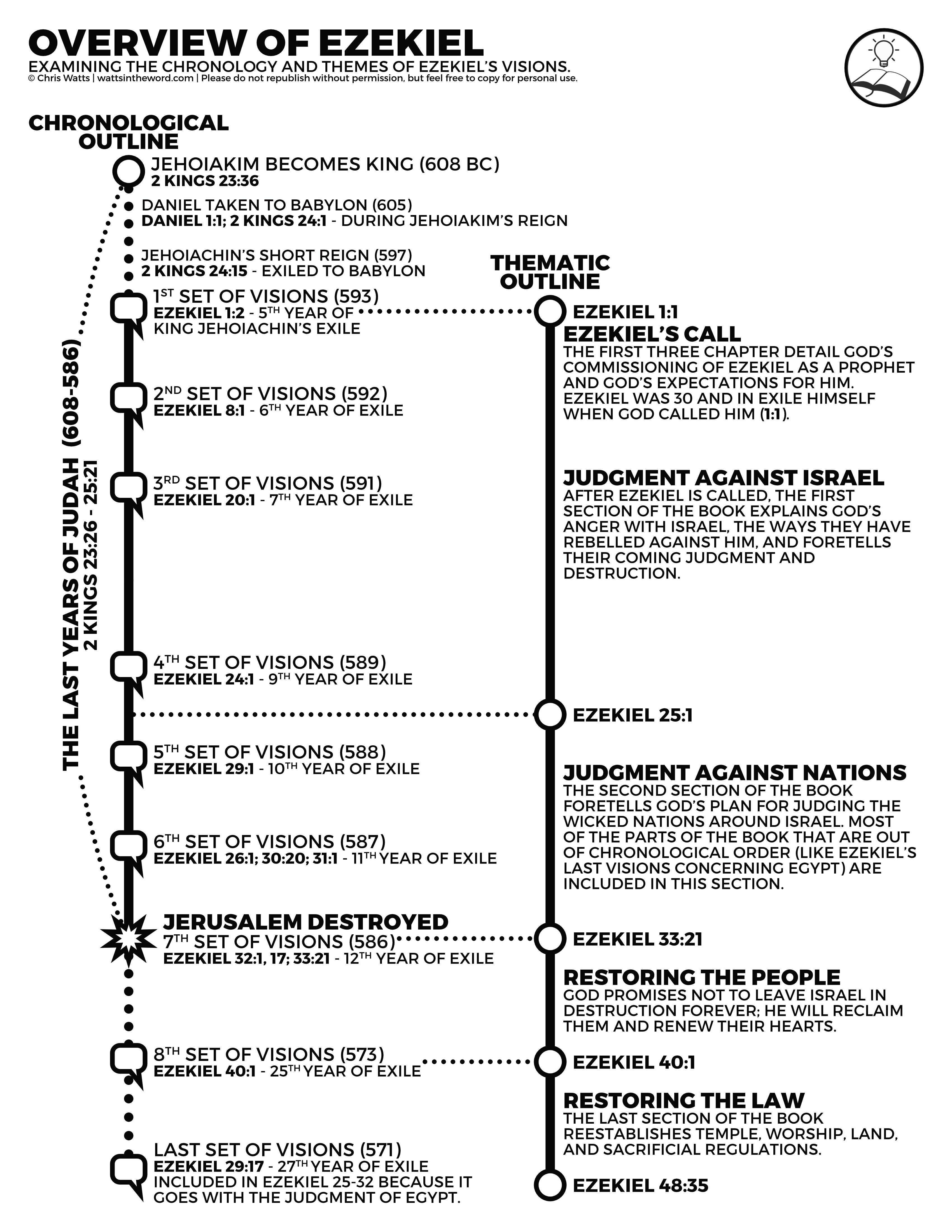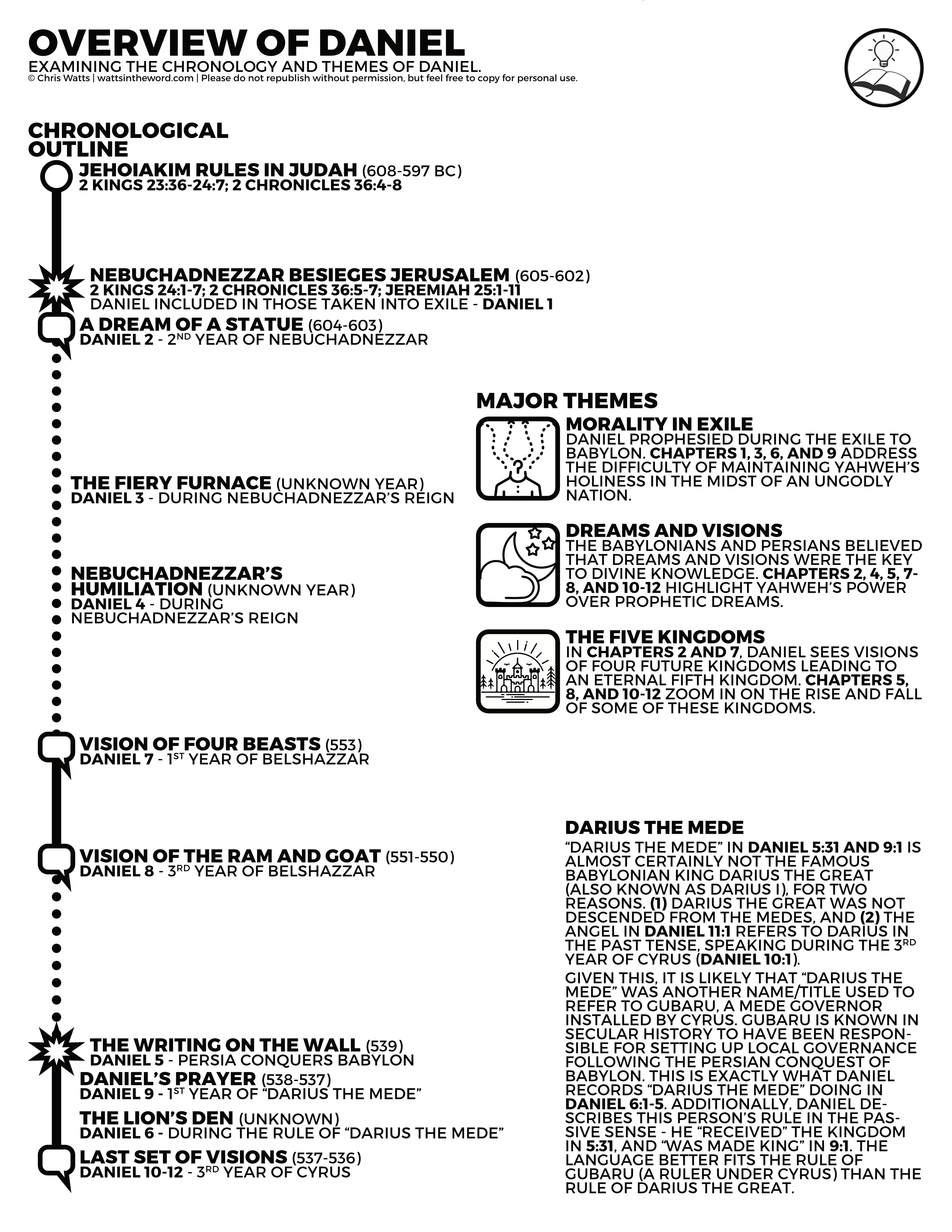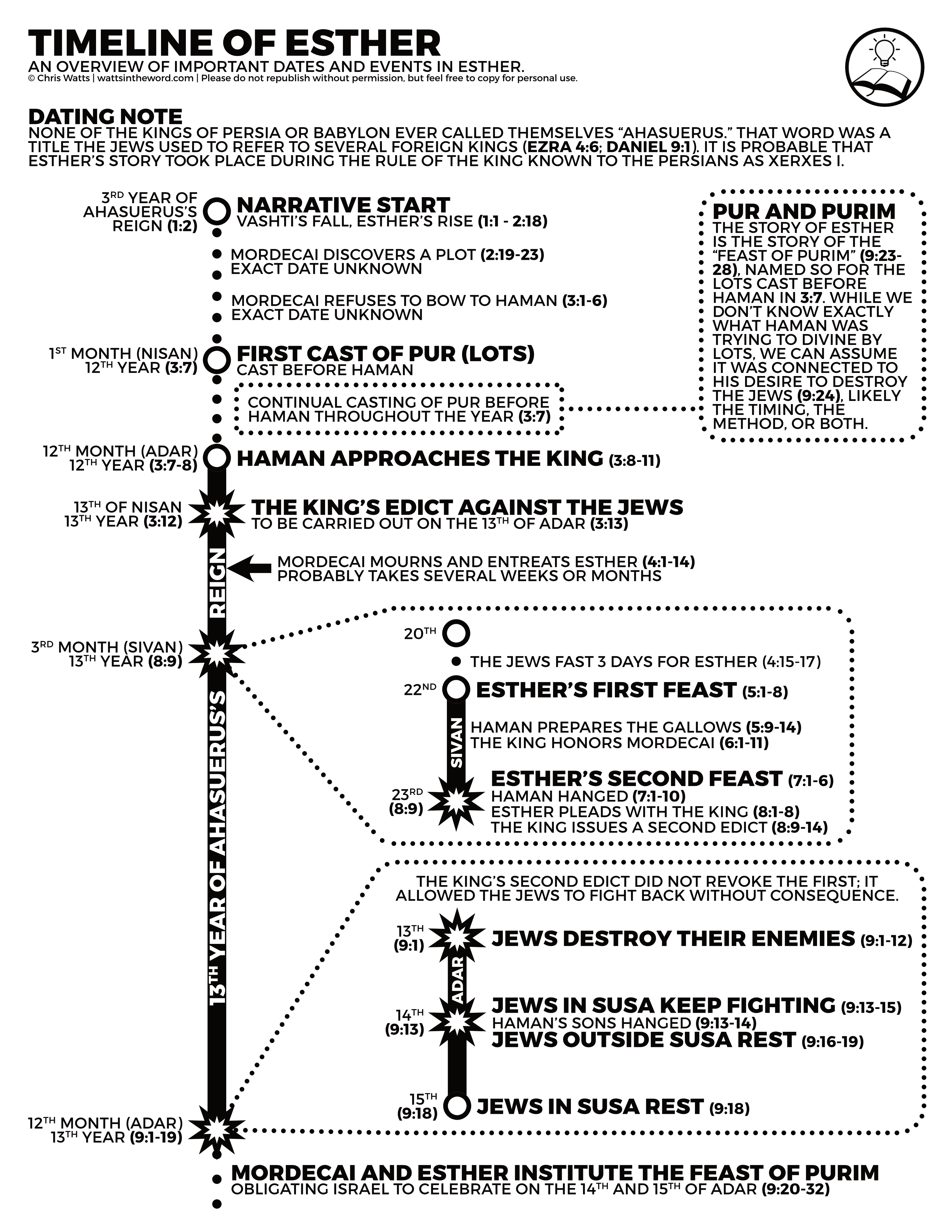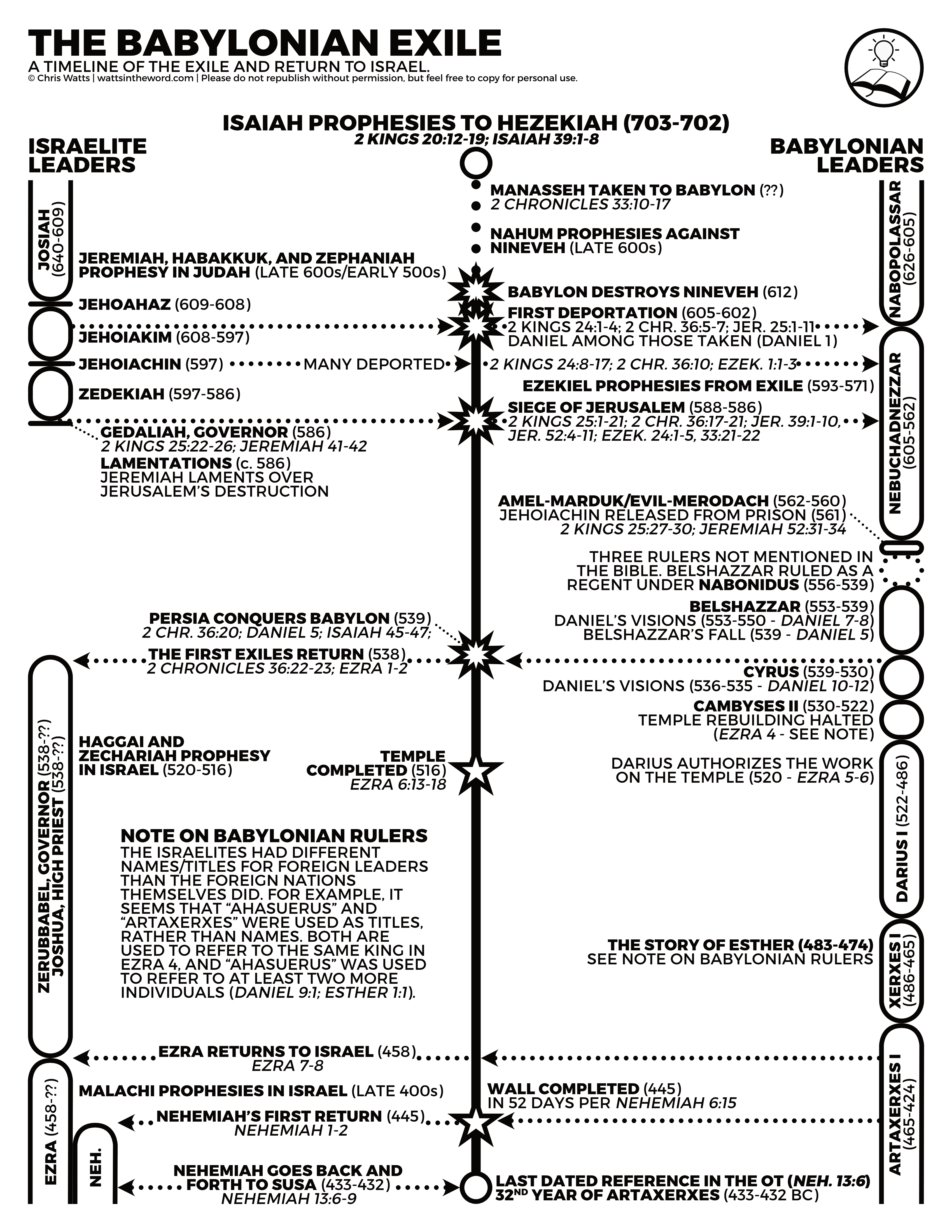
The exilic writing of the Old Testament is some of the most powerfully applicable Old Testament Scripture to the modern reader. I am excited to arrive at them in our journey through the story of the Bible this year.


The exilic writing of the Old Testament is some of the most powerfully applicable Old Testament Scripture to the modern reader. I am excited to arrive at them in our journey through the story of the Bible this year.


This was by far one of the most difficult charts/timelines to put together in our journey through the Bible this year. The Babylonian exile and eventual return serves as the backdrop for many Old Testament books. I hope this can give you a clearer overall picture of this momentous period of Biblical history.

The book of Jeremiah is not arranged chronologically, so in our reading through the Bible our text for this week comes a little out of historical order. Jeremiah 29 is addressed to people living in exile after Babylon had come against Israel and carried many of them away. What did Jeremiah have to say to these exiles, and how does their situation mirror our own?
(Preaching through the prophets of Israel. This sermon was preached at the Dewey Church of Christ on July 13, 2025.)
We begin our study of Ezekiel (as we usually begin book studies) by examining the historical and political context of Ezekiel’s life and visions. What was going on at the time Ezekiel prophesied, and who was his original audience? How does this matter for the modern reader?
(Preaching through Ezekiel. This sermon was preached at the Dewey Church of Christ on October 6, 2024. The charts mentioned can be found here and here.)